Berl-Berl Field Guide
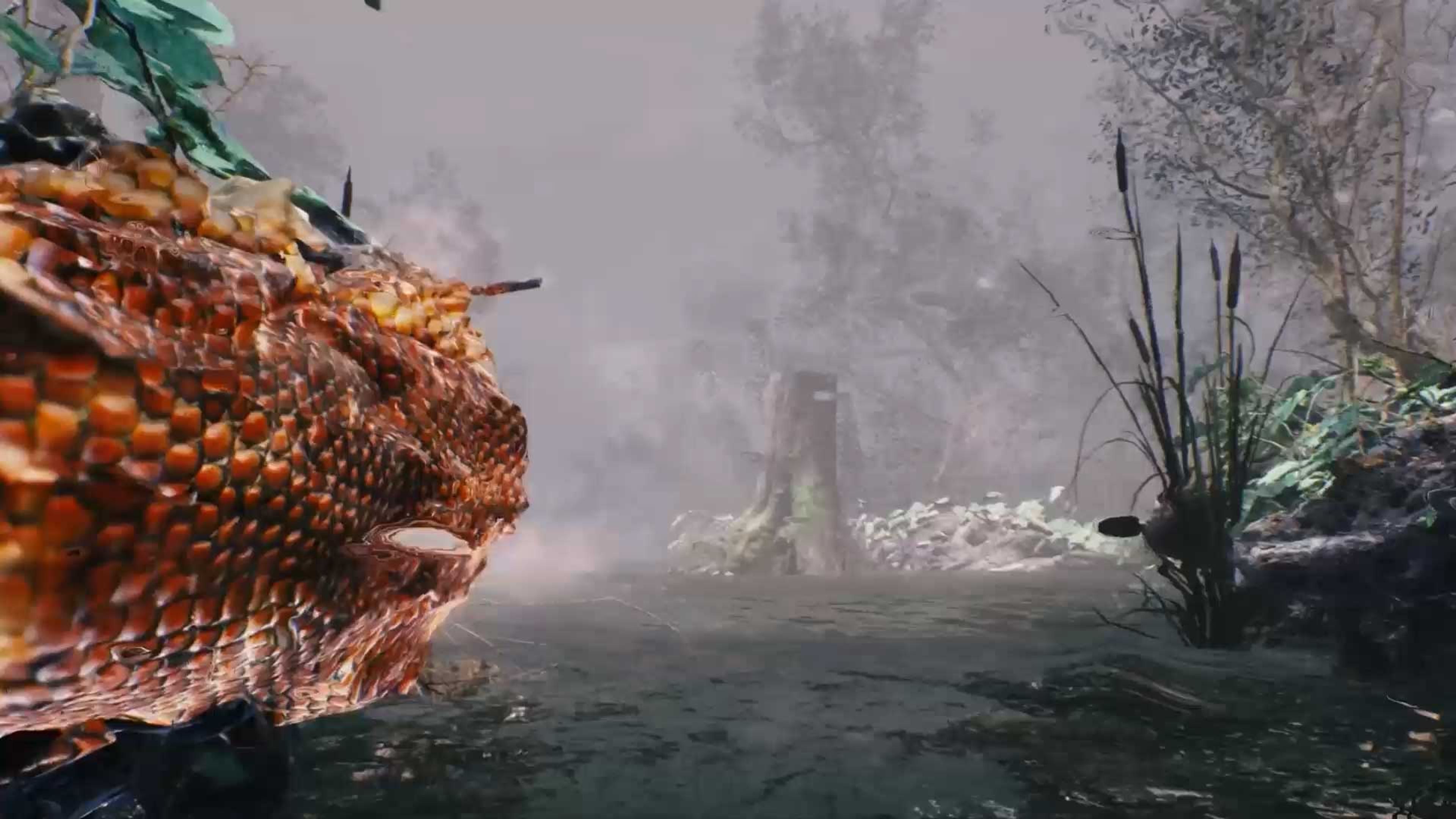
Berlin is built on a swamp—“Berl” is the Slavic word for it. A journey through the work on three levels: from the sky, through the earth, down to the roots.
Jakob Kudsk Steensen’s work centres on Berlin’s history as a wetland and the mythologies it holds. The artist shifts between the analogue and the digital, new technologies and scientific discourse, futuristic landscapes and complex soundscapes. He creates wholly captivatingexperiences that reorient our perception of time and space.
Triglav – a pagan deity – appears in Berl-Berl in the form of a great tree. Within the mythology, the deity is three-headed, representing three distinct dimensions of Slavic cosmology: Prav (Heaven), Yav (Earth) and Nav (Underworld). These three dimensions structure the journey through the work: from heaven across the earth into the underworld.
Berl-Berl places Berlin at its centre – its origins and its past as well as our future. Merging times and shifting perspectives, Berl-Berl is a hybrid ode to this city founded on a swamp and the memory of this lost world.
Prav · Sky
The first dimension is devoted to stories about the swamp and the ideas associated with it. Berl-Berl is a song for the swamp, a place for the undefinable – morphing, liminal and mystical. Here, old songs and myths meet contemporary science fiction: different ways of imagining a landscape that resists fixed categories.
Myths and Songs
Long before the swamps were drained, people in the region had their own ways of living with them. Songs were essential to ancient wetland culture, used to navigate the swamp and to share stories and swamp mythologies. Within Sorbian mythology especially, water-spirits, such as Vodyanoy, appear as frog-like entities, extensions or embodiments of the swamp, both guiding and deceiving their human cohabitors. Berl-Berl is reviving wetland sensibilities and perspectives more akin to ancient communities and their deep connection to the swamp.
‘I dreamed of a place where the songs came from the earth’
— Precious Okoyomon, Sky Song for Berl-Berl
Fiction as a Tool
Jakob Kudsk Steensen has embraced a more fantastical, arguably romantic realm. He found inspiration in eco sci-fi writers such as N. K. Jemisin and Jeff VanderMeer. Kudsk Steensen uses the power of science fiction and a sense of strangeness within the swamp of Berl-Berl to guide audiences in rethinking their surroundings.
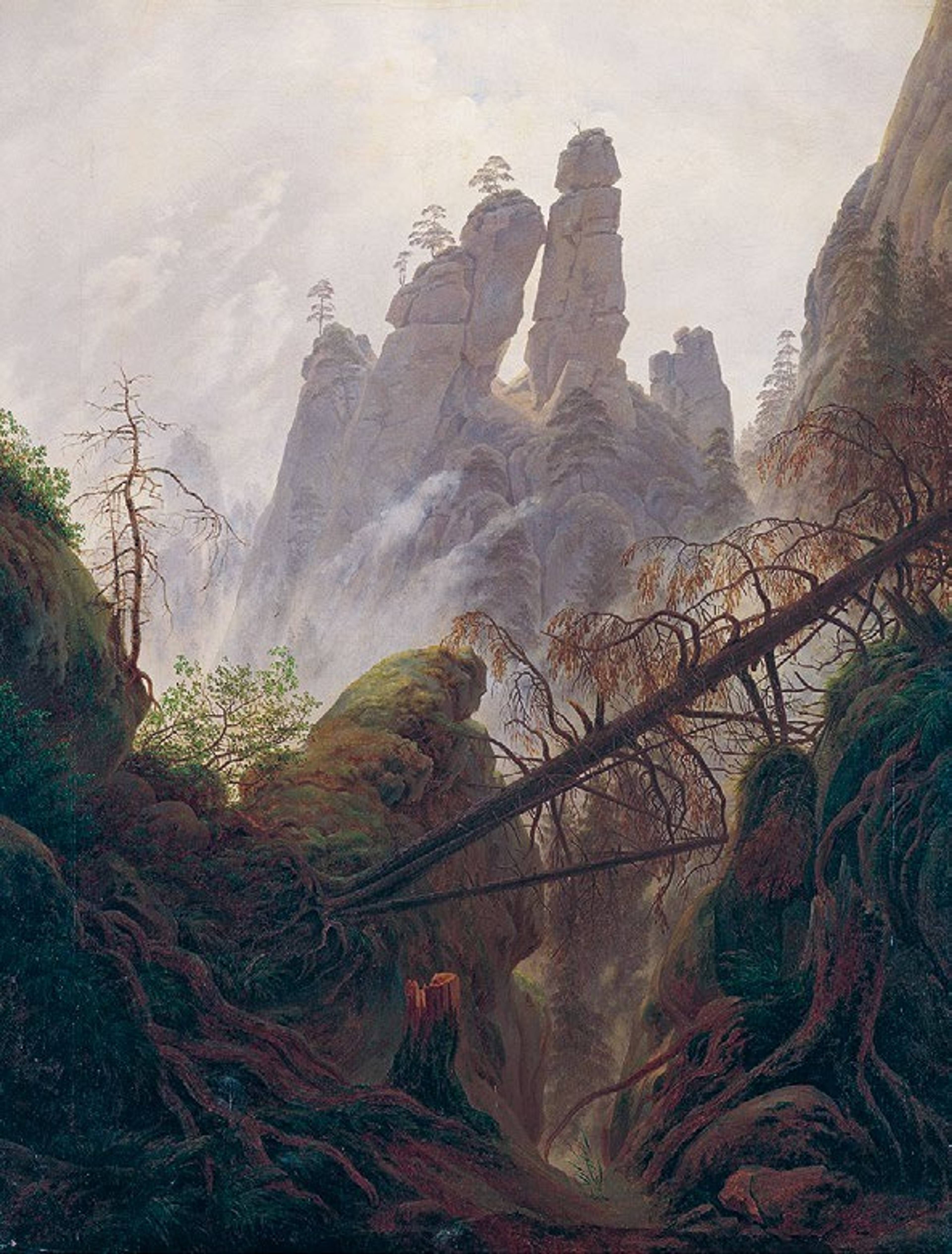
At the same time, the work draws on Romanticism: Berl-Berl is at once beautiful and nostalgic – drawing from romantic or classical ideas of a lost Eden – but at the same time an illusion, a mystical fantasy of an ecosystem.
Yav · Earth
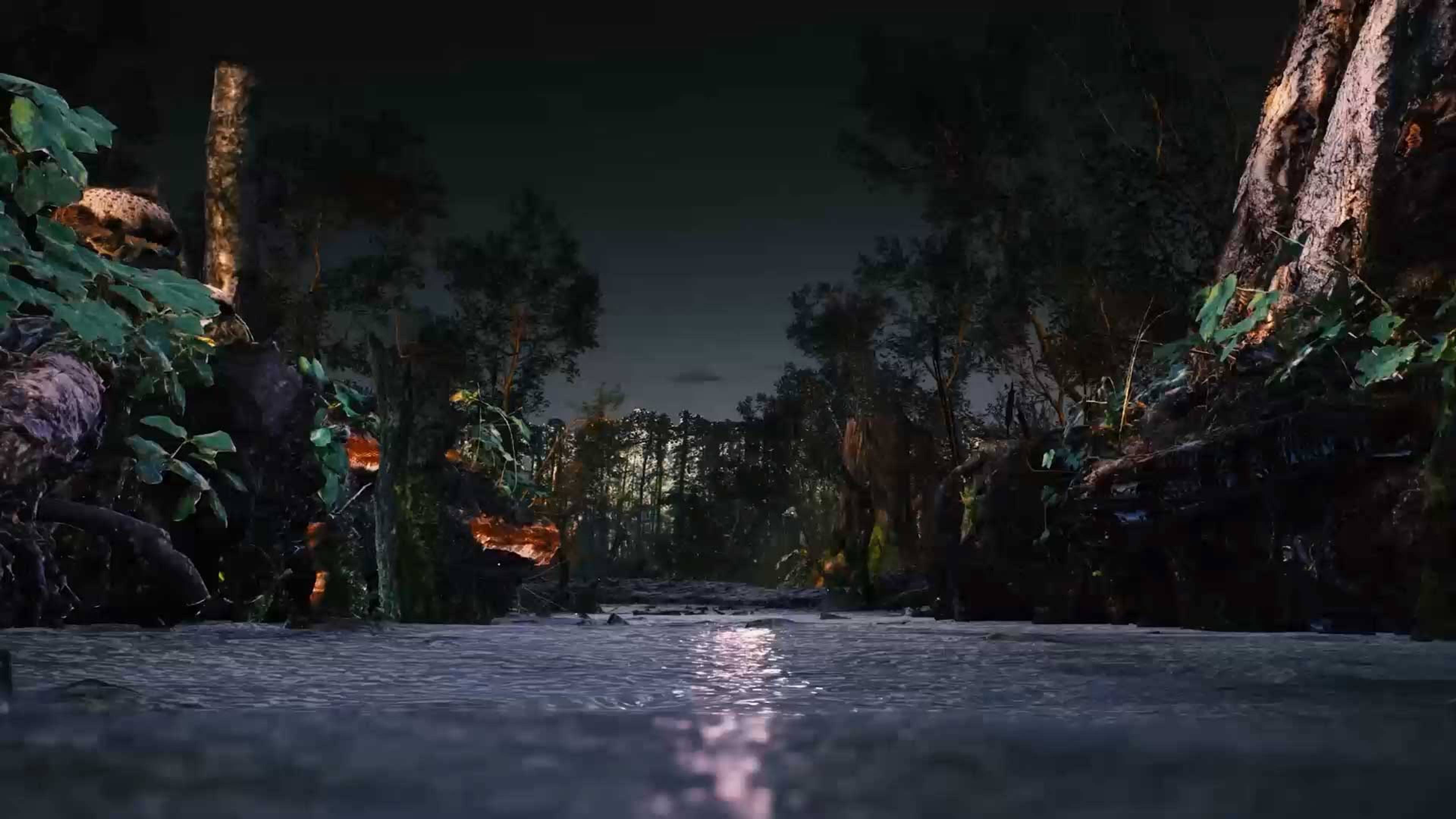
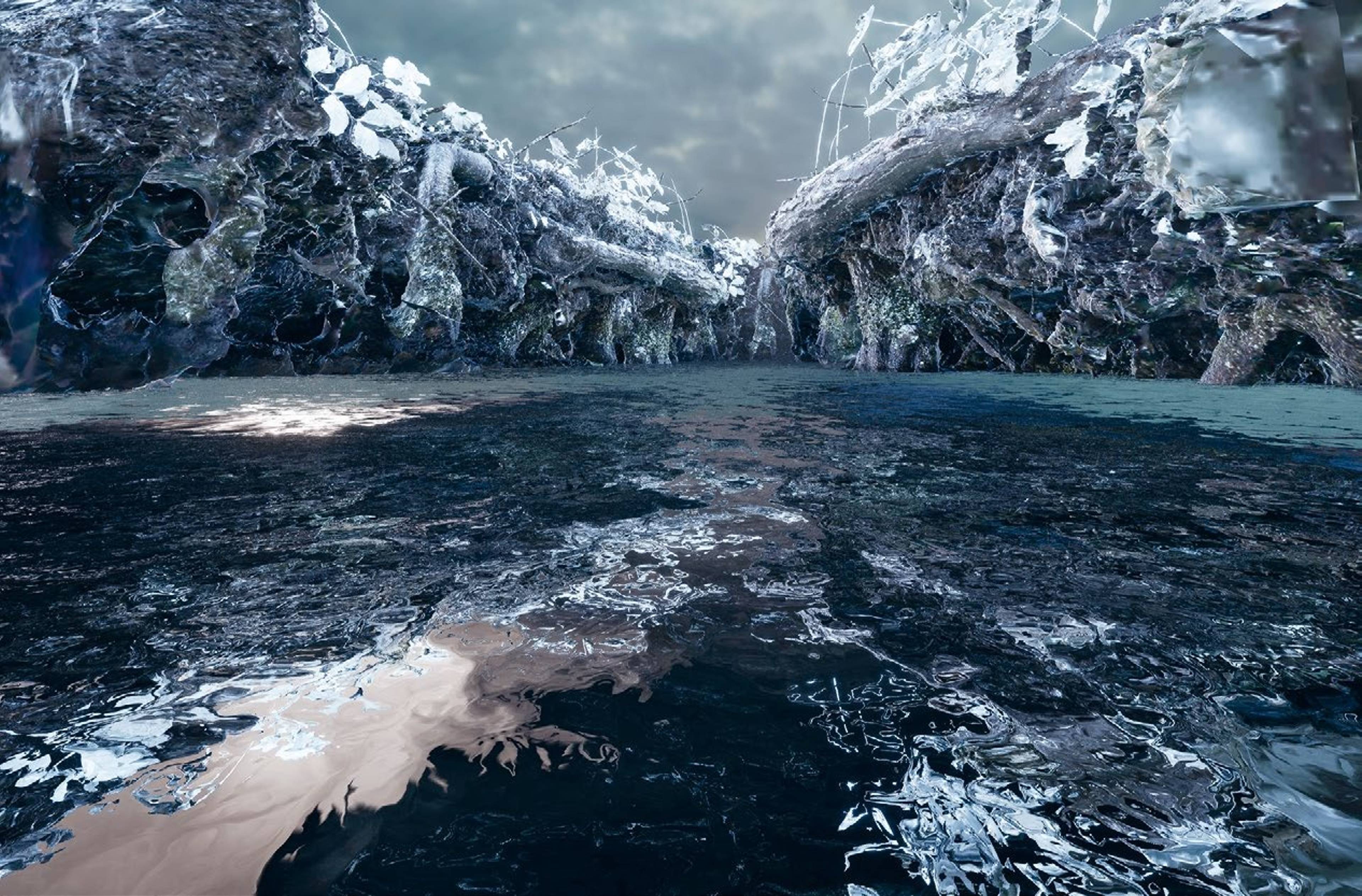
Berl-Berl is a landscape. The second dimension leads down to the ground: to the landscape from which Berlin emerged, to the species that still inhabit it, and to the work in the mud from which the artwork grew. Berl-Berl starts with a swamp as its protagonist.
The Suppressed Swamp
Ten thousand years ago, at the end of the last Ice Age, the Warsaw-Berliner-Urstromtal was formed, a huge riverbed that produced wetlands and the rivers Spree and Dahme. In the 1700s, the birth of capitalism and the Age of Enlightenment created a framework for the majority of swamps in the West to be drained.
‘… the city’s iconic ‘Museum Island’ situated along the river Spree stands on structural wooden posts.’
Swamps were seen as antithetical to this order – dangerous, chaotic, uncivilised and therefore in need of control, destroyed under the banner of progress. And yet: Although wetlands account for only one per cent of the planet’s ecosystems, they account for ten per cent of its biodiversity and play an important role in reducing carbon and acting as a filter for freshwater.
The Inhabitants
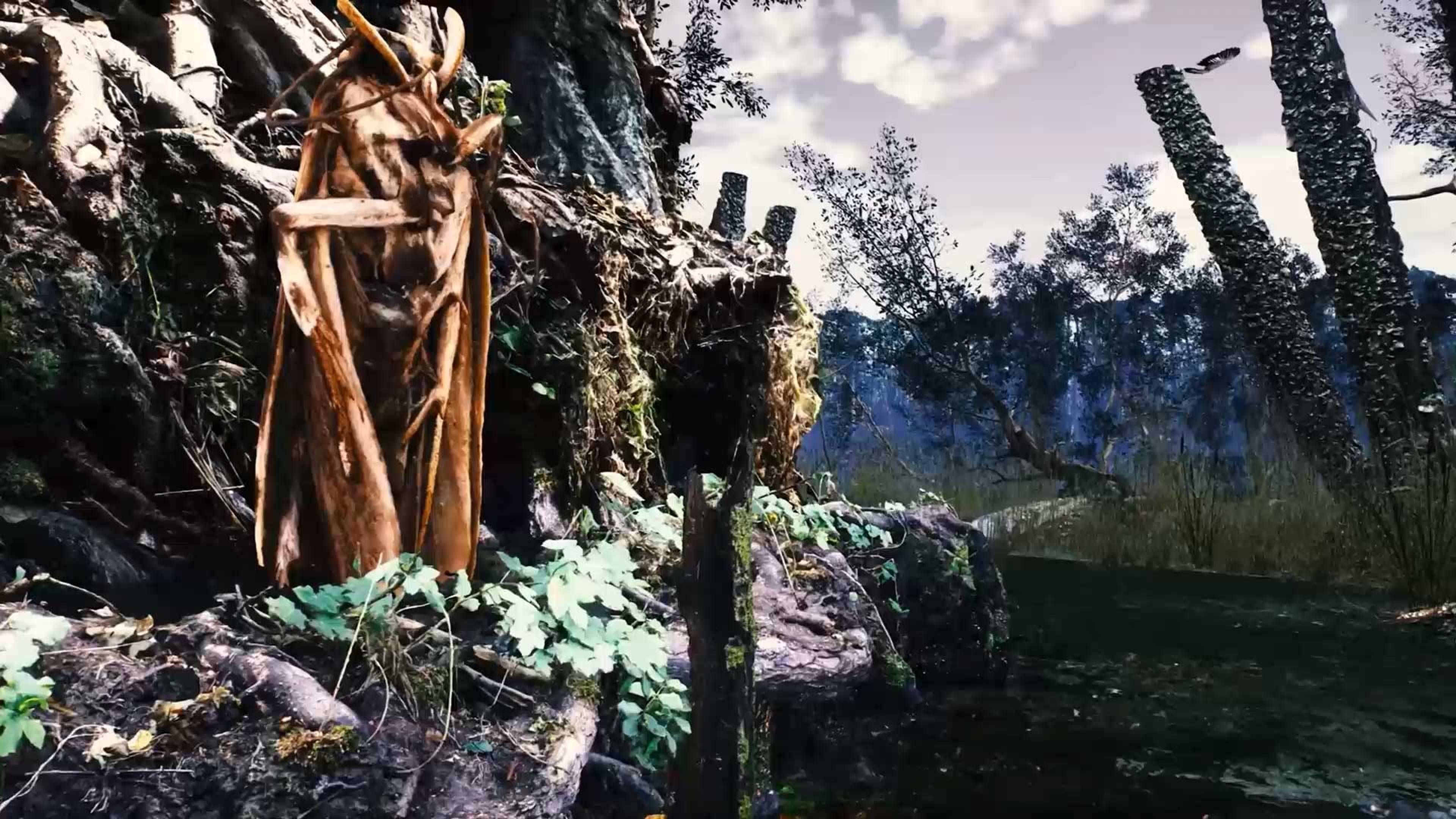
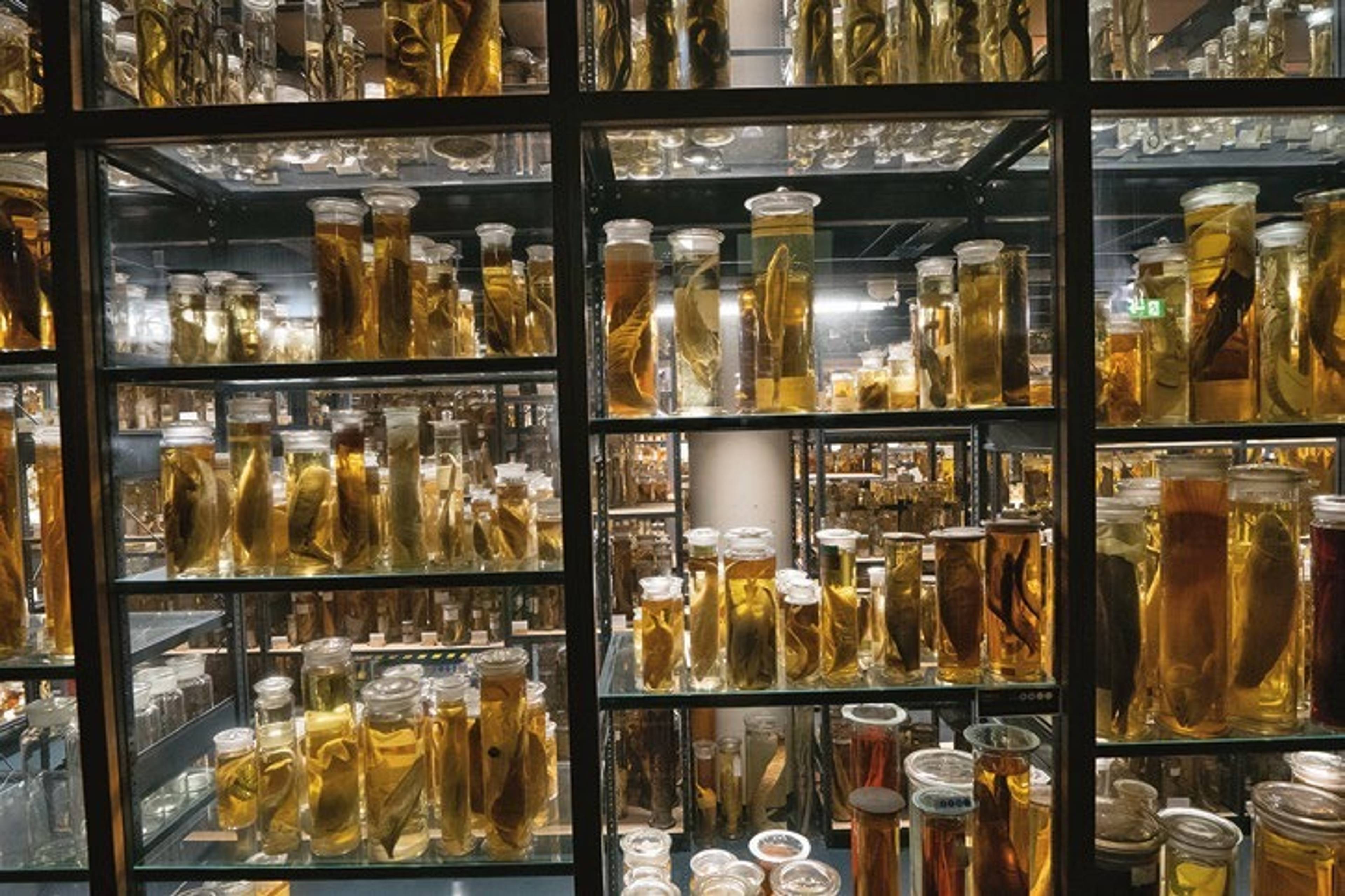
Kudsk Steensen is particularly interested in amphibians, protagonists within Berl-Berl. In many societies the archetypal animals are symbols of wetlands and ecosystems. The artist’s interest in frogs extends from their ancient importance to a darker contemporary reality – thousands of amphibians are disappearing across the world, namely due to a fungus spread by humans. Here, the Museum für Naturkunde Berlin introduces ten species from Berlin’s wetlands, from the dipper to the ostrich fern. Many of them have already found a new virtual home in Berl-Berl.
From Field to Simulation
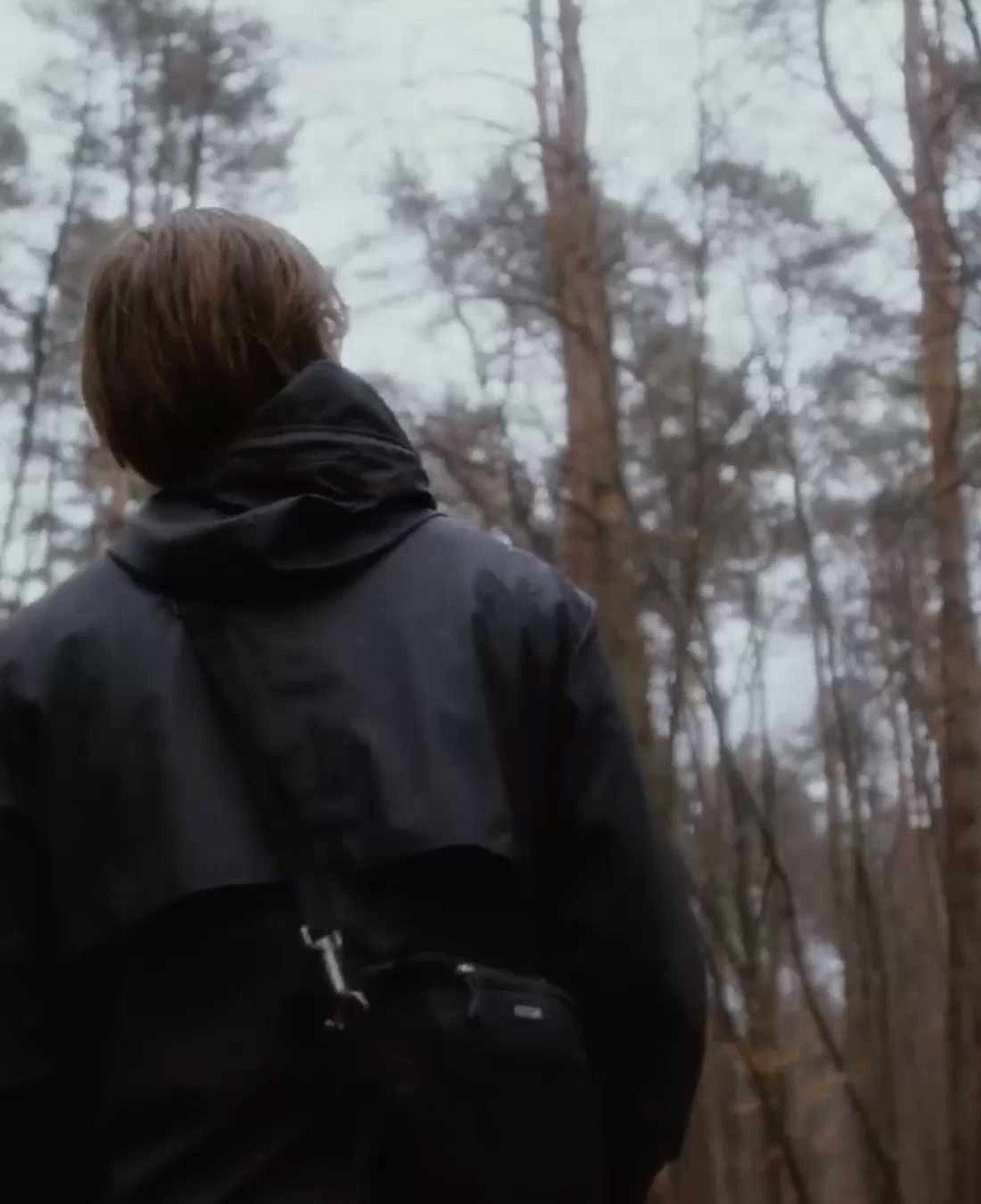
For Berl-Berl, the artist spent hours researching, this time within the remaining wetlands of Berlin-Brandenburg, notably, the Spreewald, to create an archive of images using his method of macro photogrammetry. He takes hundreds of images of a single object – a leaf, patch of mud, algae – to recreate it, with all its complexity, within a virtual plan. The artwork is experienced ‘live’ in real time – running from the video game engine – it is not a fixed animation or video. Like a real forest, Berl-Berl is never the same twice.
Nav · Underworld
Berl-Berl connects us with the spirit world that is right there beneath our feet. The third dimension turns to what works below the surface: the ideas that sustain the work and the question of what is lost and what remains. What we see is the blossom, which passes. The rhizome remains. (C. G. Jung)
Thinking the Swamp
The swamp has always served as a mental model. Simultaneously solid land and fluid water yet also neither. They resist the categories through which we order the world. Philosopher Bruno Latour argues that it is in the defining of such distinctions – such as between nature and culture – that the seeds of our climate emergency were sowed. Berl-Berl asks how nature, humanity and culture can be re-entwined.
‘We live and breathe in the space that decomposition leaves behind’
— Merlin Sheldrake, quoted by Emma Enderby
Loss and Future
Berl-Berl mourns what is lost and embraces what is new. The work turns to our epoch, the Anthropocene, in which humankind has become a geological force of its own making, causing the sixth extinction.
Kudsk Steensen has described this as ‘touching time’: seeing the swamp as a space that melds time through the knitting of life and decay.‘We don’t live on a linear timeline, something that happens in 50 years might be directly related to something that happened yesterday.

Jakob Kudsk Steensen
Jakob Kudsk Steensen's (b. 1987, Denmark) artistic practice deals with environmental storytelling through 3D animations, sound works and immersive installations. Kudsk Steensen has recently exhibited at venues including: Serpentine Galleries, London (2020/2019); Venice Biennale (2019); PinchukArtCentre, Kiev (2019); MATADERO Madrid (2019); Pylon-Hub, Dresden (2019); Tranen Space for Contemporary Art, Copenhagen (2018); South by Southwest, Austin (2019); 5th Trondheim Biennale for Art and Technology (2018); Carnegie Museum of Art, Pittsburgh (2017); Ok Corral, Copenhagen (2017); BRIC Brooklyn (2016); MAXXI Rome (2016); FRIEZE London (2019). The artist was the inaugural recipient of the Serpentine Galleries’ Augmented Architecture Commission, which was established with Google Arts & Culture and architect Sir David Adjaye, OBE in 2019. Kudsk Steensen was shortlisted for the Future Generation Art Prize 2019. As part of the awards programme, he was invited to create and exhibit new installations of RE-ANIMATED (2017–18) in Kiev and Venice. He has received awards from the Cinequest Film & Creativity Festival (2019), Telly Awards (2018), Games for Change Awards (2018), Danish Arts Foundation (2017), Lumen Prize (2017), Lumière Foundation (2017), Augustinus Foundation (2012) and the International Academy of Digital Arts and Sciences.