nom nom
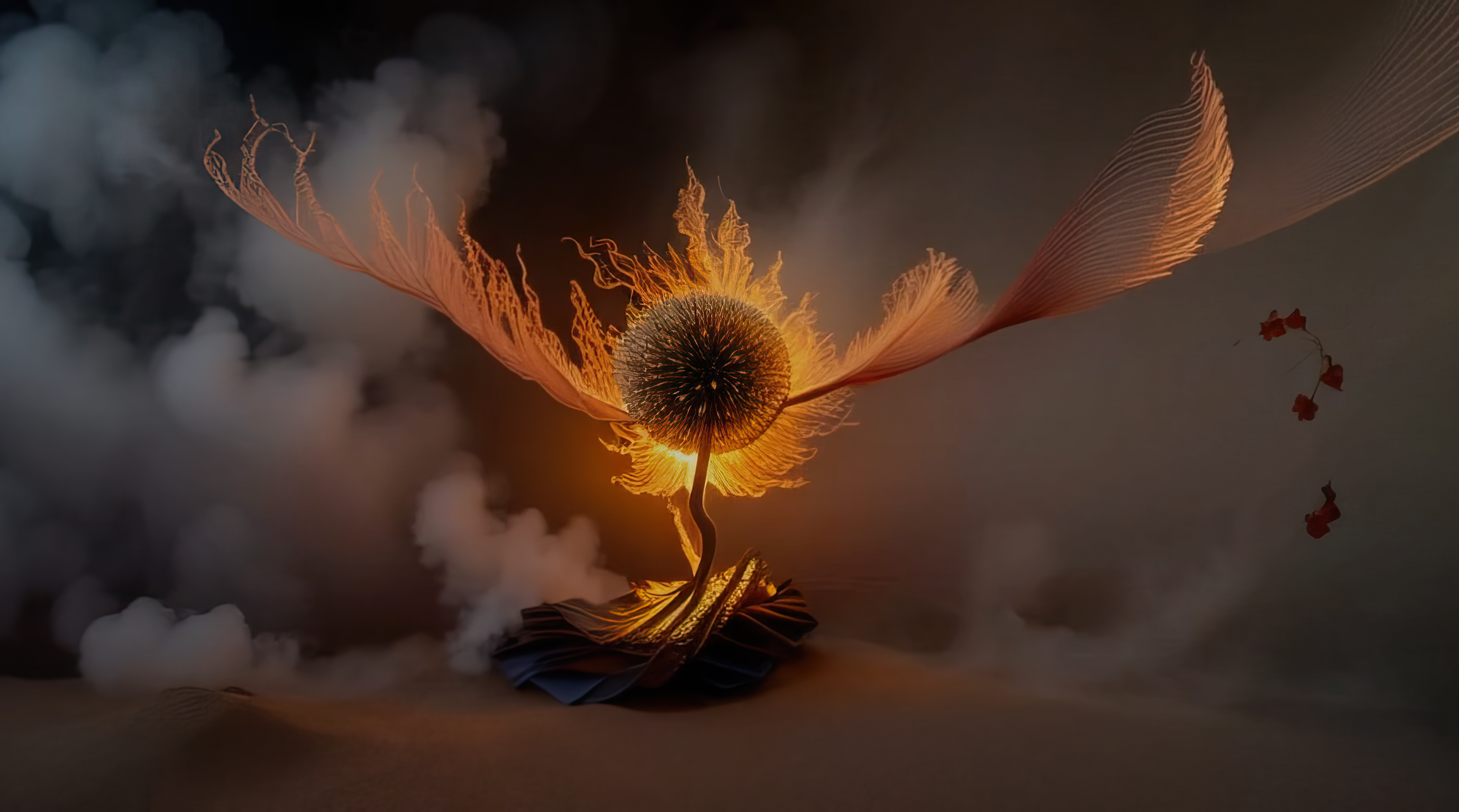
Xin Liu’s nom nom explores life and intelligence not as properties of individual beings, but as conditions that arise wherever matter interacts.
Explore nom nom here
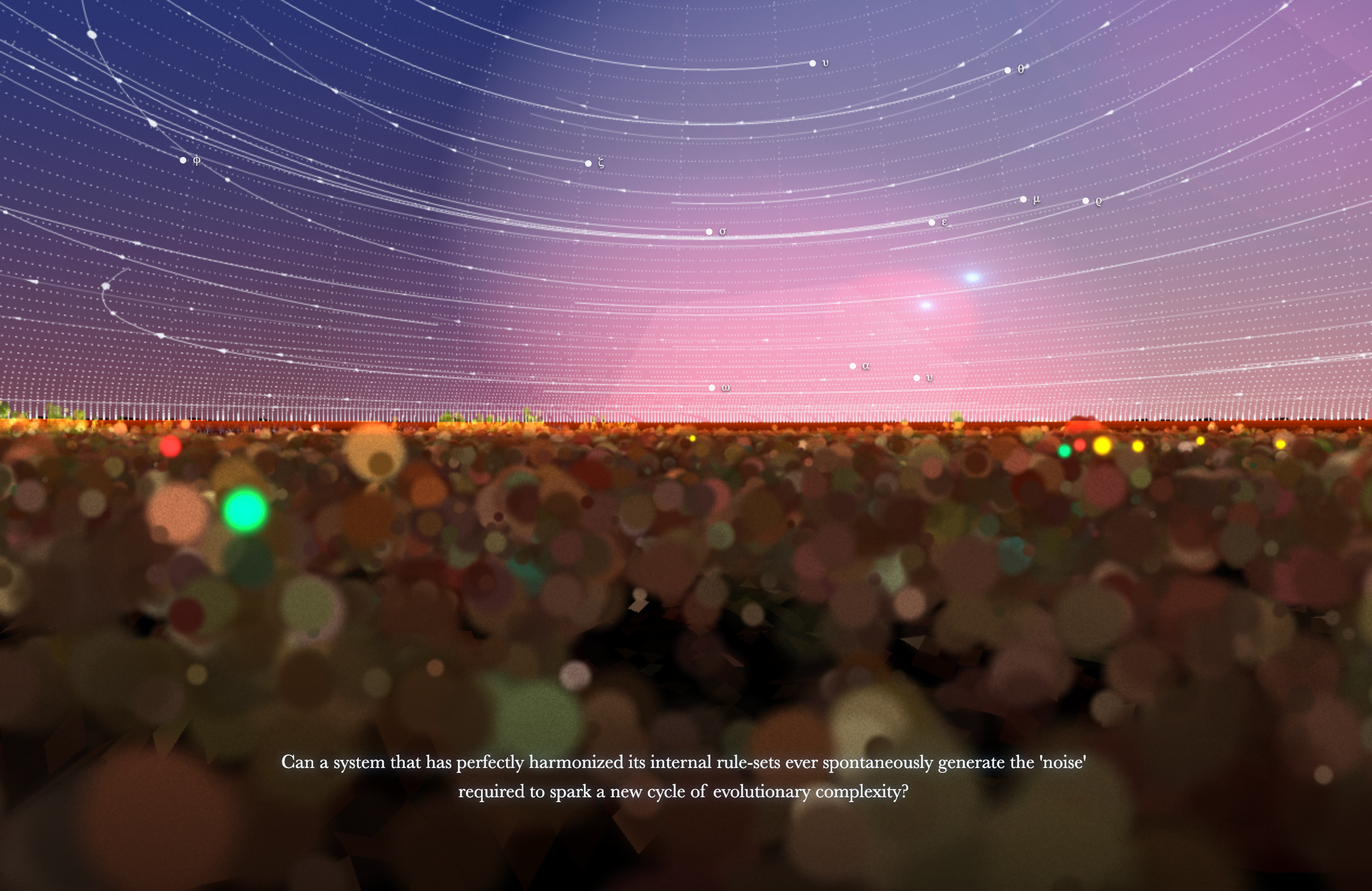
The work is a navigable simulation composed of millions of interacting particles that form an evolving world. It was developed by the artist to explore distributed intelligence and the continuous transformation of matter. In the work, no single particle possesses knowledge of the whole. Each change in state is based only on interactions with its immediate neighbours, triggering them to grow, collapse, compete or recover. From these local exchanges, landscape-like structures emerge.
The simulation is driven by Neural Cellular Automata (NCA). These are small neural networks that model the ability of biological cells to self-organise and form complex organisms from a single entity. nom nom marks the beginning of the artist’s engagement with simulated living systems (), a field of research that is increasingly informing the next generation of AI.
nom nom was originally commissioned by LAS Art Foundation in collaboration with Google Arts & Culture Lab, and developed during a six-month LAS Online Artist Residency 2025-2026. The residency set out to support two artists, Xin Liu and Eunjo Lee, in exploring digital world building and the simulation of living systems. It gave them specialised access to AI tools and technical advisory and engineering support from Google Arts & Culture Lab, alongside continuous support from the LAS curatorial team. Through in-depth processes of research and experimentation, both artists imaginatively probed the technologies that increasingly shape the environments we move through. You can find Eunjo Lee’s online commission In Your Eyes, Before My Own here.
Take a look behind the scenes of the LAS Online Artist Residency on Google Arts & Culture here.
“With nom nom, I want to explore an image of intelligence that is not concentrated in one monumental massive model, but distributed across millions of tiny neural networks that react only to their surroundings.”
– Xin Liu
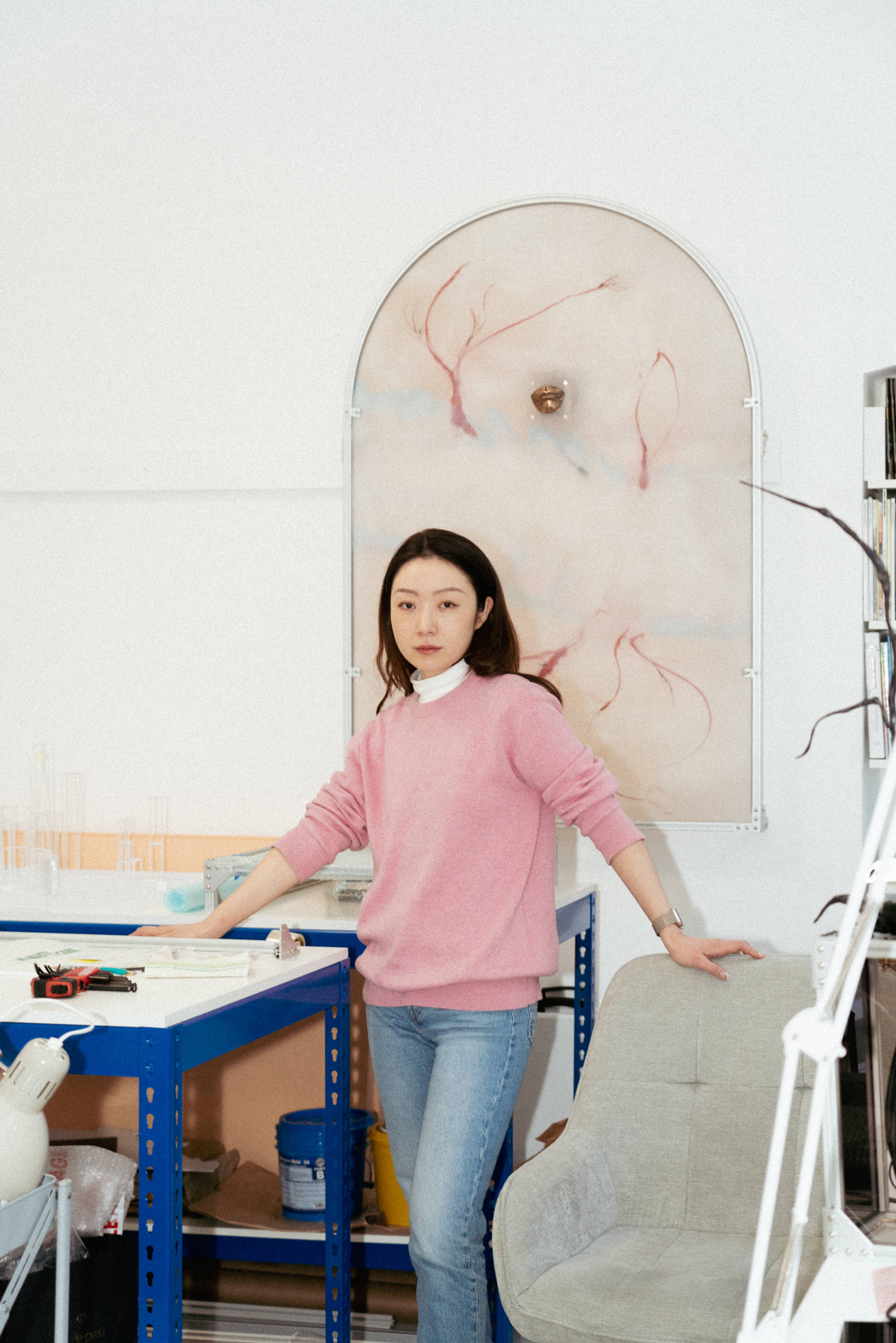
Xin Liu
Xin Liu is a London-based artist and engineer examining the transformation, circulation, and degradation of matter across technological and planetary systems. Liu has held research and artistic positions at the SETI Institute, the MIT Media Lab, and Cornell Tech. She currently leads creative and strategy at Episteme, a new science research institute. Liu has been commissioned by Hyundai Artlab, BMW Culture Group, M+ Museum, Hong Kong, Google Arts & Culture, and Ars Electronica, Linz and exhibited at the Shanghai Biennale, Thailand Biennale, MoMA PS1, New York, MAXXI, Rome and the Sundance Film Festival, Colorado. Her honors include the Henry Moore Foundation Artist Award, the K11 Artist Prize, and Forbes 30 Under 30 Asia, among others. Current projects include a solo exhibition at Fondazione Sandretto Re Rebaudengo, Turin, and participation in The Aural Sea, the Uzbekistan National Pavilion’s group exhibition at the 61st Venice Art Biennale.
In collaboration with
Credits
Xin Liu, nom nom, 2026
Originally commissioned by LAS Art Foundation in collaboration with Google Arts and Culture Lab, and developed during an LAS Online Artist Residency 2025-2026
LAS Art Foundation
Google Arts and Culture Lab