The Phantom Combatants

LOCATION
Ateneo Veneto di Scienze, Lettere ed Arti
A new commission rethinking resistance through biological enhancement and ancestral ritual
LAS Art Foundation (Berlin) and Amos Rex (Helsinki) present a new commission by Natasha Tontey at Ateneo Veneto on the occasion of Biennale di Venezia – 61st International Art Exhibition. Tontey’s multimedia installation relays the story of a 1950s female resistance fighter in Indonesia. Exploring physical and chemical transformation, Minahasan symbolism and contemporary military imaging, the work addresses the sovereignty of bodies, cultures and land.
The Phantom Combatants and the Metabolism of Disobedient Organs is Tontey’s most ambitious work to date. It is commissioned by LAS Art Foundation and Amos Rex, two future-oriented art institutions founded within the last ten years to support new artistic practices in a technological age.
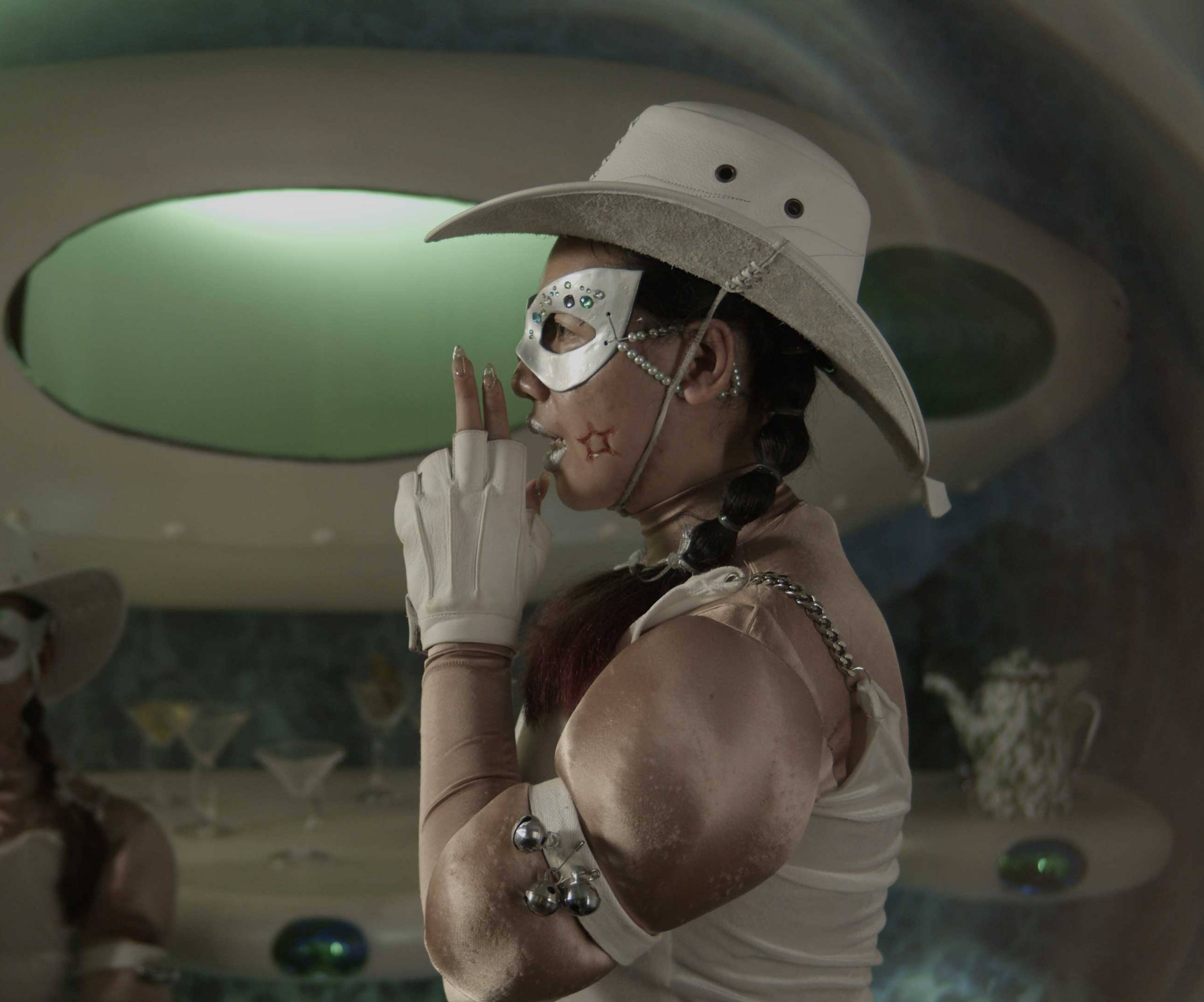
“Through this project, I try to listen to the quieter tones of history [...]. At the same time, this minor knowledge also opens up the possibility of developing a technological future rooted in other perspectives [...].”
— Natasha Tontey
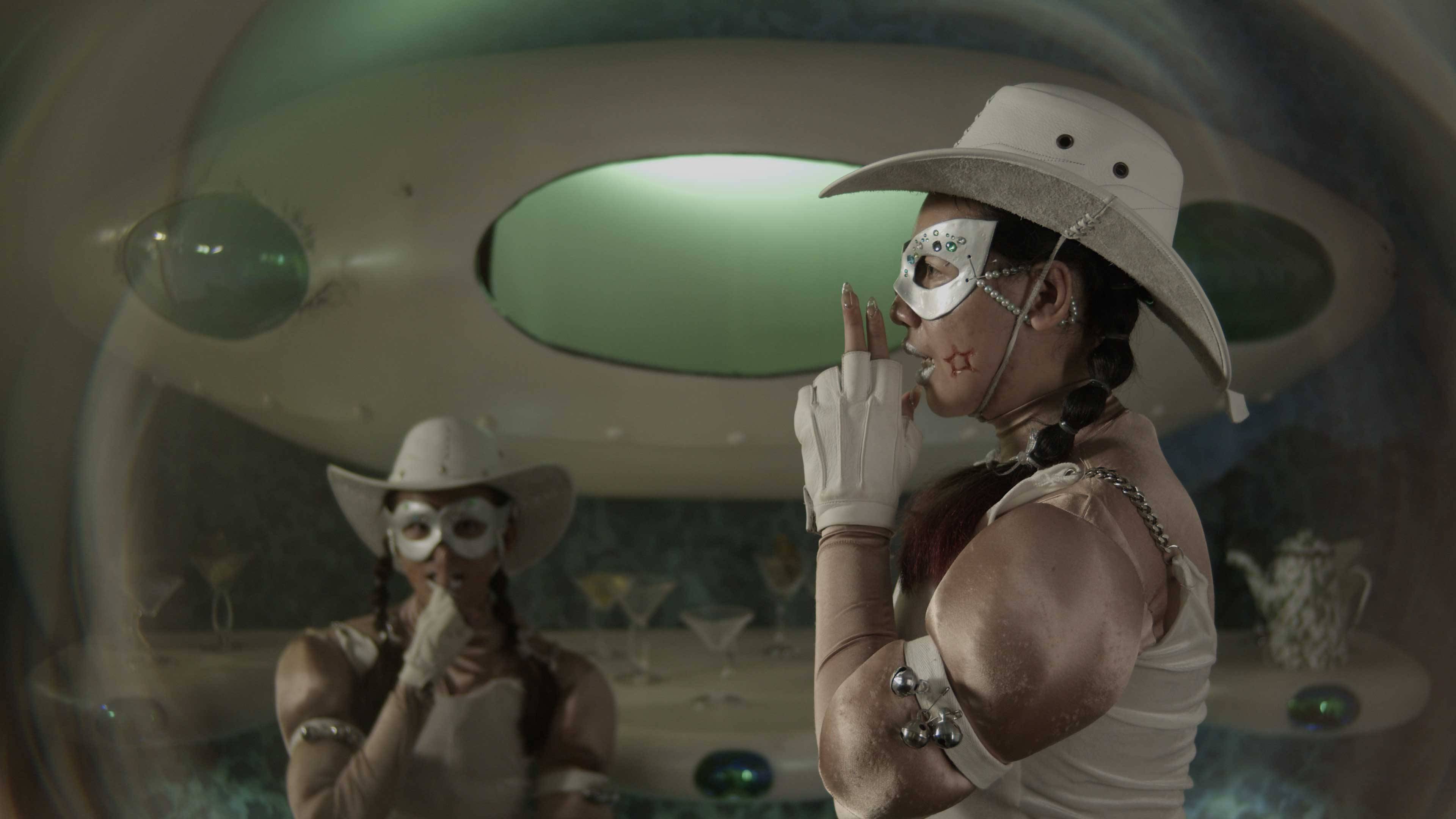
The Phantom Combatants is presented at Ateneo Veneto, Venice’s academy of science, literature and the arts, located in San Marco in a sixteenth-century building. The project brings together video, sound and sculpture with architectural elements designed by Giulia Foscari, UNA/UNLESS. It reimagines the story of Len Karamoy, a combatant in Permesta, a political movement in North Sulawesi fighting the centralised rule of the Indonesian government from 1957 to 1961 with support from the CIA. In Tontey’s retelling, Karamoy is not a single historical figure but a mythic presence, multiplied into the ‘Phantom Combatants’ through a chorus of young troops. Her mutant body — with three breasts and exaggerated muscles — emerges as a flamboyant emblem of self-determination, whose disobedient organs metabolise ancestral and insurgent forces.
The narrative unfolds as a tale of betrayal and justice: when Karamoy’s lover forms a radicalised faction and weakens Permesta, she and her Phantom Combatants enact retribution. Guided by a shaman, they train and perform rituals of transformation that chemically and spiritually strengthen them.
Karamoy, like Tontey, is Minahasan, an indigenous group based in North Sulawesi whose layered identity includes both Christian and animist beliefs. Ateneo Veneto’s coffered ceiling, visible above the installation, features a series of paintings titled Cycle of Purgatory (1600) by Jacopo Palma il Giovane, illuminated in red by Tontey. An incorporated part of the Minahasan belief system, purgatory also reflects the liminal state of unresolved political struggle explored by Tontey in The Phantom Combatants. A winding ramp beginning at the entrance of the installation brings visitors unusually close to the paintings’ depiction of souls in transition, while a mirrored floor merges their reflections with Tontey’s imagery, producing an interplay of mythic figures suspended outside of time.
The video uses the playful aesthetics of campy B-movies, a mix of DIY and CGI effects, and imaging technologies including the latest quantum ghost imaging that uses photons to produce images, as well as remote sensing method LiDAR (Light Detection and Ranging), 3-D modeling photogrammetry techniques and thermal cameras — invoking the ways through which territory and bodies are measured, mapped and militarised. Featuring highly stylised costumes and props, the work delves into moments of heightened theatricality, complemented by playful and inventive editing techniques.
Marking the third instalment in Tontey’s Macho Mystic Meltdown series (2025–26), The Phantom Combatants centres feminist and indigenous perspectives in rethinking resistance. The work makes a timely appeal to arguments for autonomy and self-determination, asking the visitor to reconsider sovereignty — not only of territory and knowledge, but of the body itself — in a world where all three remain sites of contested power.
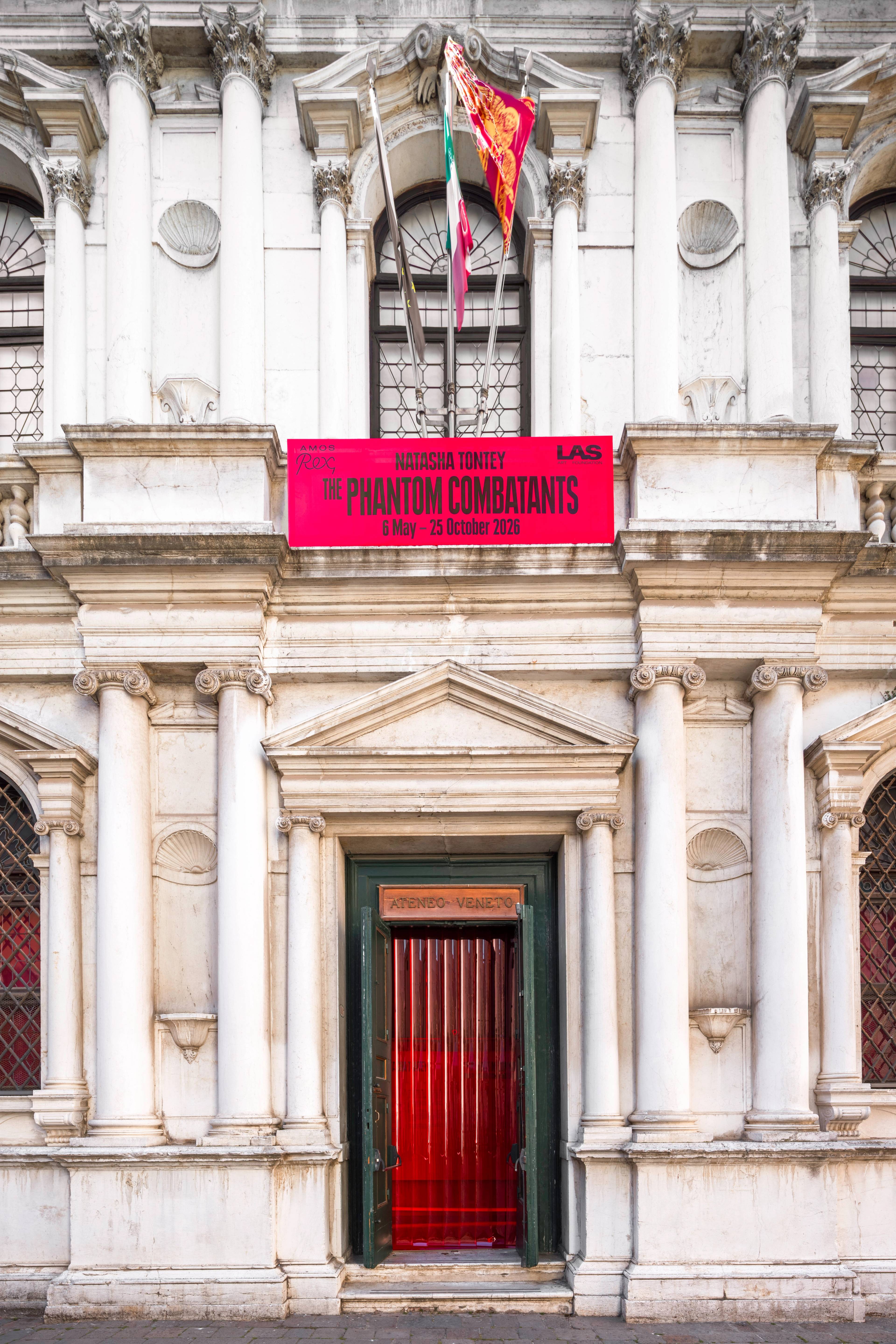
Natasha Tontey, The Phantom Combatants and the Metabolism of Disobedient Organs, 2026. Installation view at Ateneo Veneto, Venice, Italy. Commissioned by LAS Art Foundation and Amos Rex. © 2026 Natasha Tontey. Photo: Jacopo La Forgia.
Biographies
02